Speed Climbing
A 15-metre wall in seconds. Speed climbing is a head-to-head race up an identical 15-metre wall. The standard route, timing, world record trends and how athletes train.
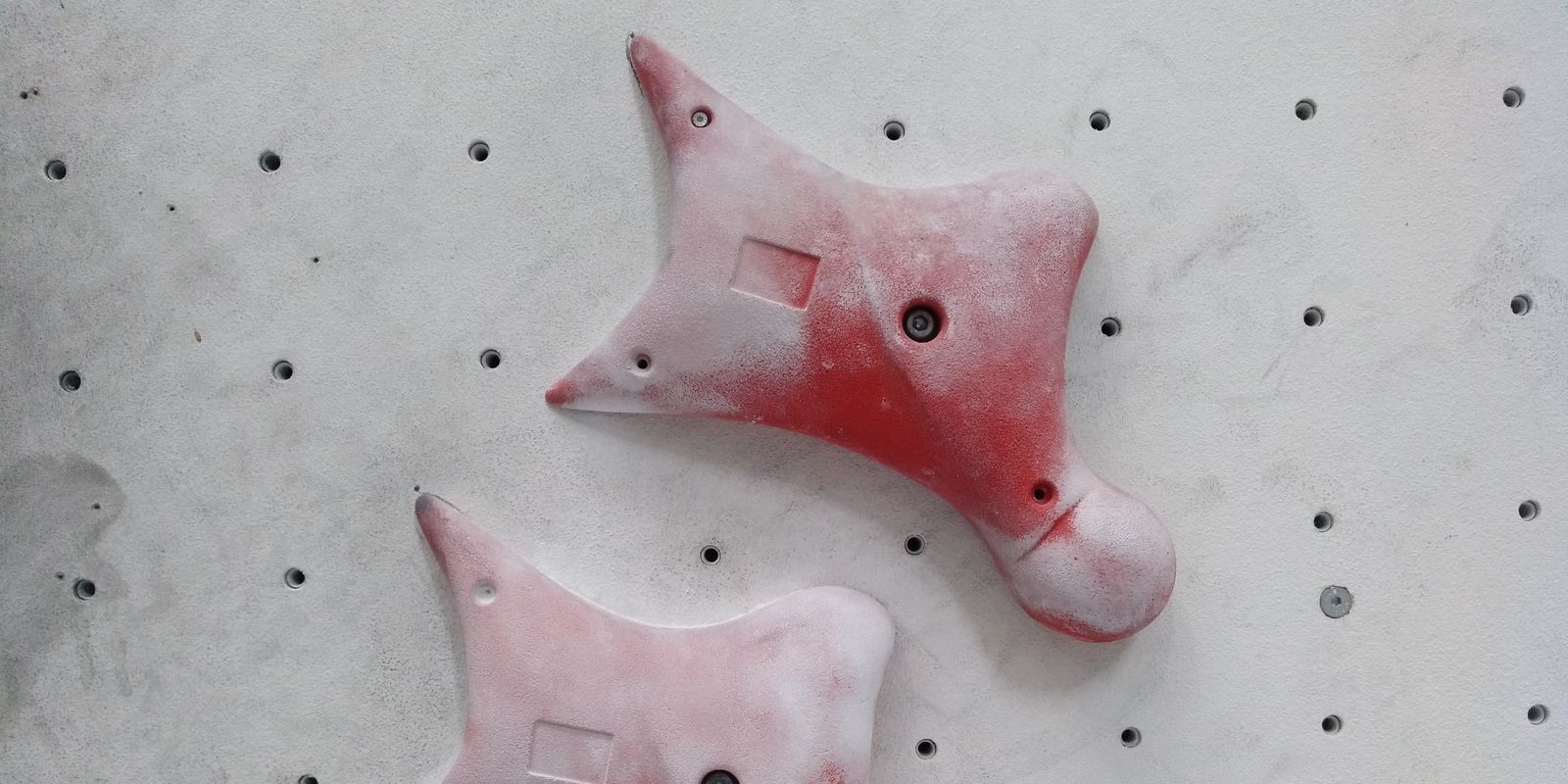
Speed climbing start holds: Polarbear24, CC BY-SA 4.0
The same route everywhere
Speed climbing is unique in climbing because the route never changes. Every official wall is 15 metres tall, tilted back at 5 degrees, with the same holds bolted in the same positions. That lets athletes memorise and perfect every move, and makes world records comparable from one venue to another.
The race
Two climbers race side by side after a start signal, with automatic timing pads at the start and a buzzer at the top that they slap to stop the clock. A false start means elimination. Knockout rounds lead to a final, so athletes must be fast and consistent under pressure.
Getting faster
Times have fallen dramatically as athletes discovered faster sequences, such as skipping holds near the bottom with a powerful move nicknamed the Tomoa skip, after Japan's Tomoa Narasaki. Top men now climb in under five seconds and top women around six seconds. World records are updated often, so check the IFSC website for the latest.
Training
Speed climbers train explosive leg power, grip strength and timing, repeating the route hundreds of times and analysing video of each section. Strength and conditioning, plus starts and reaction drills, are as important as climbing itself.
Did you know?
Speed climbing's reaction time is measured to the thousandth of a second, and a reaction faster than 0.1 seconds after the signal counts as a false start, because no human can genuinely react that fast. Athletes from Indonesia, China, Poland and the United States have dominated recent seasons. The fixed route means athletes can compare their splits on every section and improve them like sprinters improving their start, middle and finish.
Try it
Some climbing gyms have speed walls or shorter practice versions with auto-belay devices, which hold the rope automatically and lower you safely. Always follow the gym's induction and check that you are clipped in before every climb.
Professionals, don't try this: these athletes train for years with coaches, safety systems and spotters. Start at a supervised gym or club and progress slowly.
- Speed climbing start holds: Polarbear24, CC BY-SA 4.0
Text written by Legendary Awesome.