El Capitan, Yosemite
The world's most famous big wall. El Capitan's granite wall in Yosemite is the centre of big wall climbing. The Nose, Lynn Hill's free climb, the Dawn Wall and visiting tips.
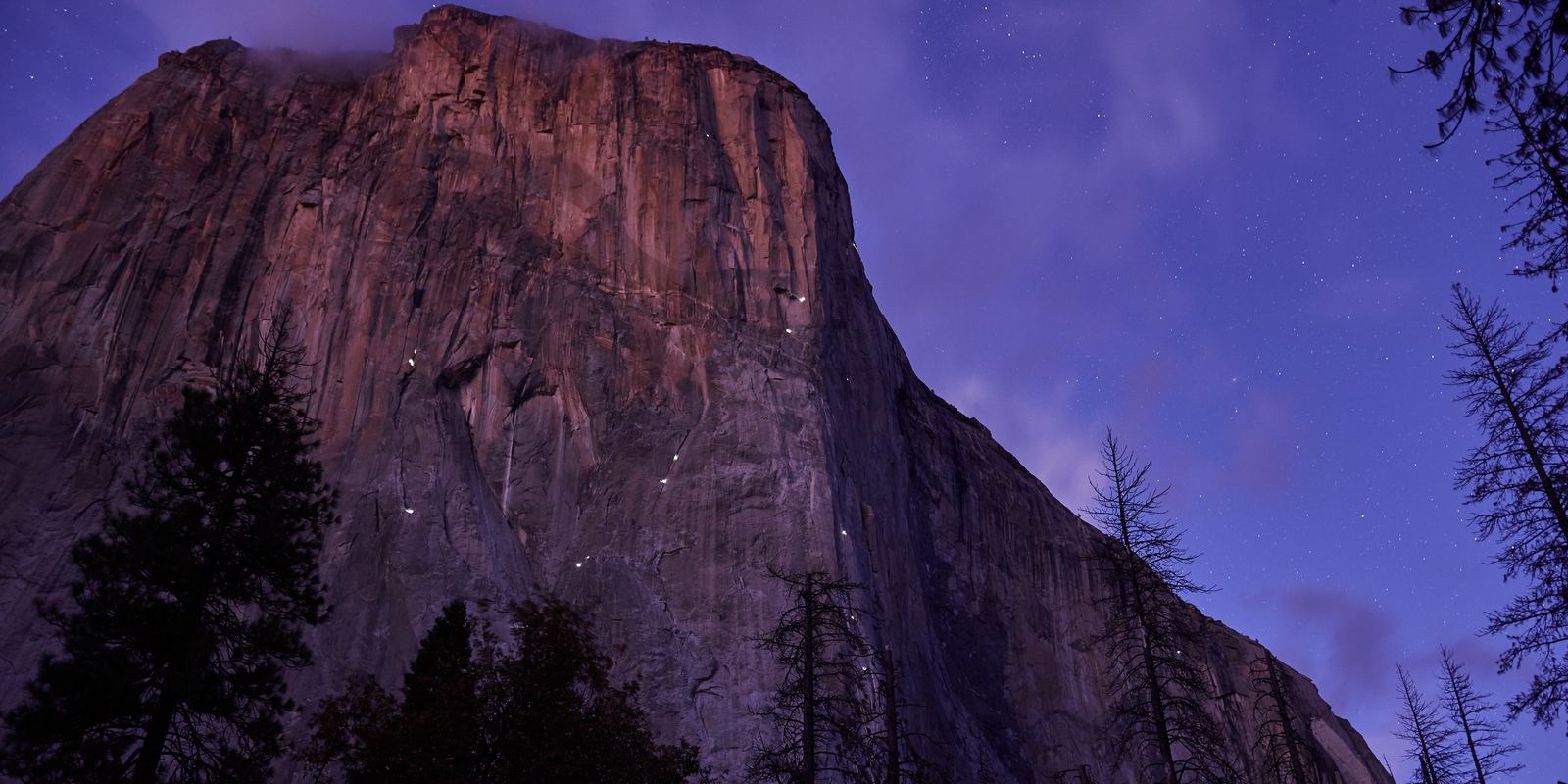
Climbers' lights on El Capitan at night: C-M, CC BY-SA 4.0
A granite giant
El Capitan rises about 900 metres above the floor of Yosemite Valley, a sheer face of granite shaped by glaciers. It is the best-known big wall in the world, and climbers spend days living on it, sleeping on portaledges, hanging tents bolted to the rock, and hauling water and food in bags.
The Nose
In 1958, Warren Harding and his team completed the first ascent of The Nose, the prow in the middle of the wall, after 47 days of climbing spread over about 18 months, using fixed ropes and bolts. Today strong teams climb it in a day, and speed records have dropped to under two hours.
Free climbing breakthroughs
In 1993 Lynn Hill made the first free ascent of The Nose, climbing every move with hands and feet while ropes were used only for safety, and the following year she free climbed it in a single day. In January 2015 Tommy Caldwell and Kevin Jorgeson completed the Dawn Wall, often called the hardest big wall free climb in the world, after 19 days on the face.
Did you know?
Climbers on El Capitan often spend several nights on the wall, and teams carry heavy bags with water, food and gear that must be hauled up after each pitch. Waste must be carried out too, following park rules. Rockfall is a real hazard, and the park monitors it. The nearby Camp 4 campground, where generations of climbers have stayed, is listed on the US National Register of Historic Places for its role in climbing history.
Visiting
You do not need to climb to enjoy El Capitan. From El Capitan Meadow you can watch climbers through binoculars, and at night their headlamps sparkle on the wall. The National Park Service manages access, and big wall climbers need permits for overnight stays on the wall. Check the park website for reservations and conditions.
Professionals, don't try this: these athletes train for years with coaches, safety systems and spotters. Start at a supervised gym or club and progress slowly.
- Climbers' lights on El Capitan at night: C-M, CC BY-SA 4.0
Text written by Legendary Awesome.