Bouldering
Short, powerful climbs without ropes. Bouldering is climbing short walls without ropes, over thick crash pads. How problems and grades work, Fontainebleau's history and getting started.
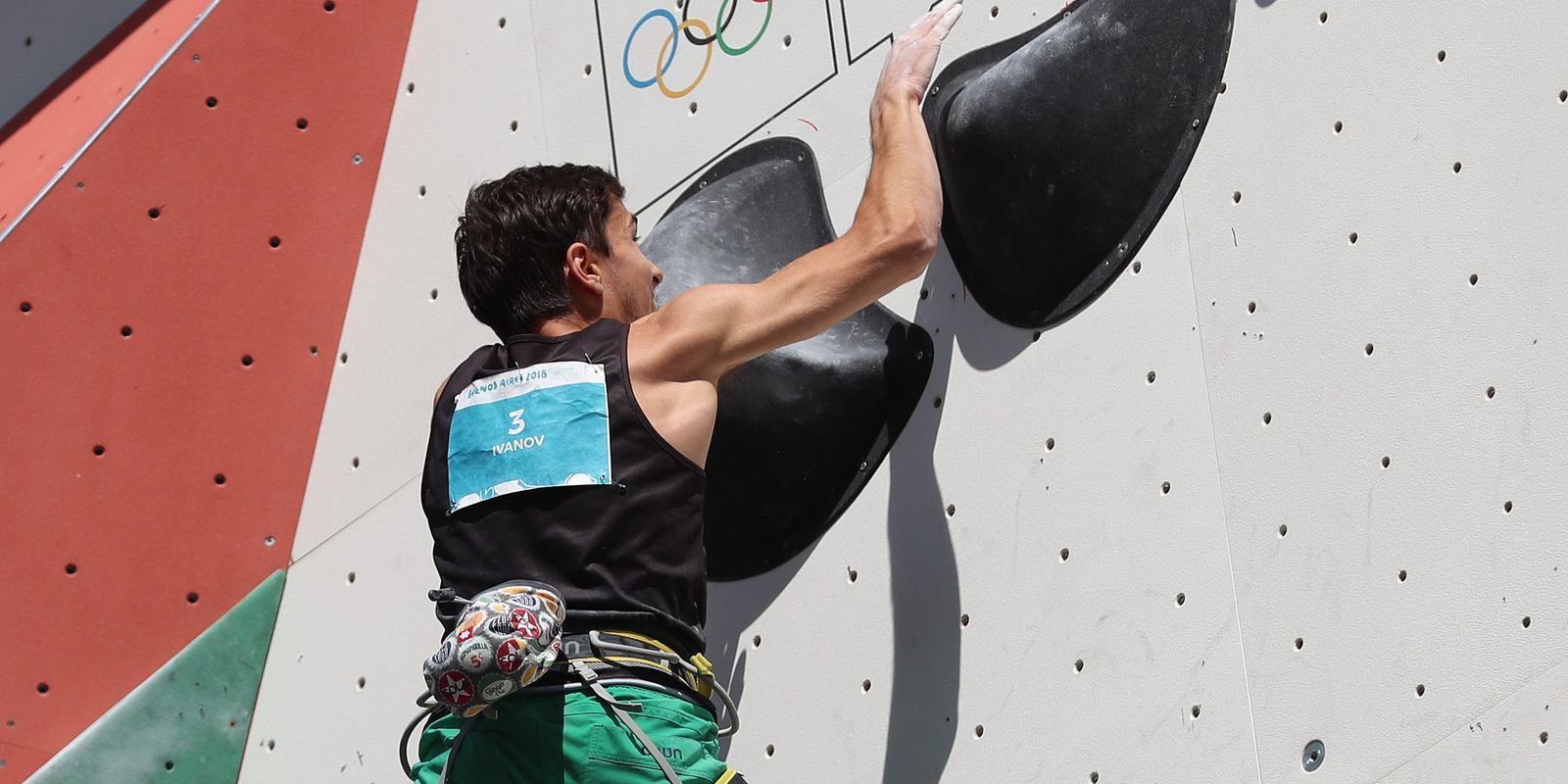
Youth Olympic bouldering, Buenos Aires 2018: Martin Rulsch, Wikimedia Commons, CC BY-SA 4.0
What bouldering is
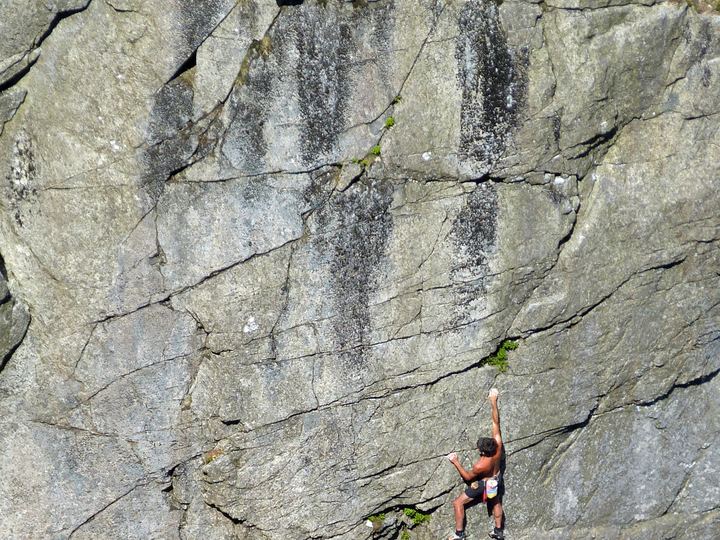
Bouldering is a style of climbing on short walls or boulders, usually no higher than a few metres, without ropes or harnesses. Each route is called a problem, because climbers must work out the moves like a puzzle. Falls land on thick foam crash pads indoors or portable pads outdoors, with a spotter guiding the climber's fall.
Roots in Fontainebleau
Climbers in the sandstone forest of Fontainebleau, near Paris, have practised on boulders since the late 1800s, at first to train for the Alps. Over the 20th century it became a sport in its own right, with painted circuits of problems of similar difficulty. In the United States, climbers such as John Gill brought gymnastics ideas and chalk to bouldering in the 1950s and 1960s.
Grades
Bouldering problems are graded for difficulty. The V-scale, developed at Hueco Tanks in Texas, runs from V0 for beginners to V17 at the elite end. Europe often uses Font grades, such as 6A or 8C, named after Fontainebleau. Grades are opinions agreed by many climbers, so the same grade can feel different on different rock or walls.
In competition
Competition boulders are set by route setters to test strength, balance and coordination, often with dynamic jumps and big moves. Climbers score by reaching the top hold with both hands under control, with partial credit for a zone hold. Bouldering is combined with lead climbing in the Olympic boulder and lead event.
Getting started
Indoor bouldering gyms offer shoe rental, colour-coded problems and introductory sessions on how to fall safely: land on your feet, bend your knees and roll back rather than reaching out with your arms. Warm up, climb down when you can instead of jumping, and never walk under someone who is climbing.
Professionals, don't try this: these athletes train for years with coaches, safety systems and spotters. Start at a supervised gym or club and progress slowly.
- Youth Olympic bouldering, Buenos Aires 2018: Martin Rulsch, Wikimedia Commons, CC BY-SA 4.0
Text written by Legendary Awesome.
← Start Safe at a Parkour GymSport Climbing at the Olympics →