Slacklining
Balance on a flat line. Slacklining is balancing on flat webbing tensioned between two anchors. Its Yosemite origins, styles, how to set up safely and why it trains balance.
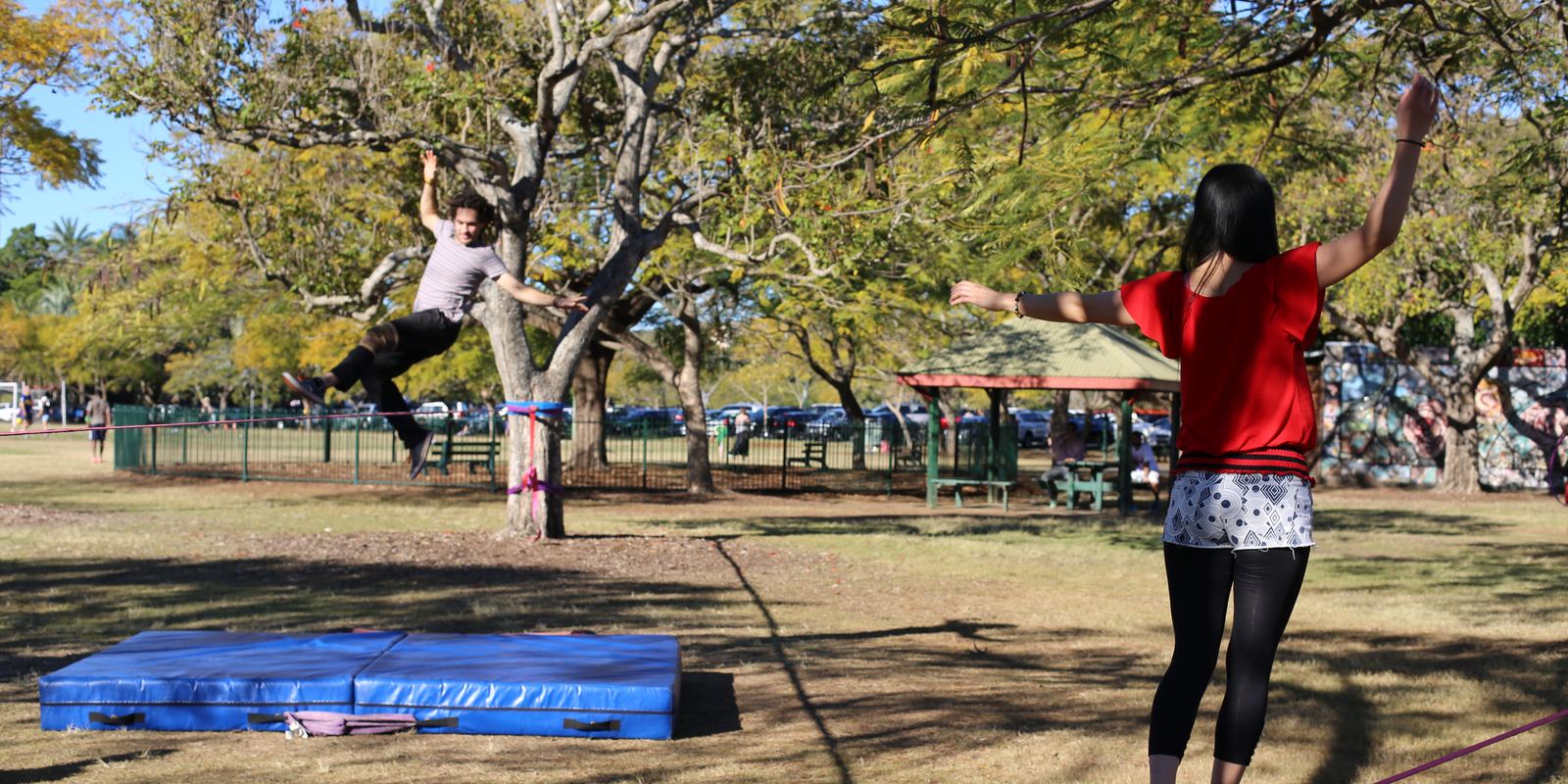
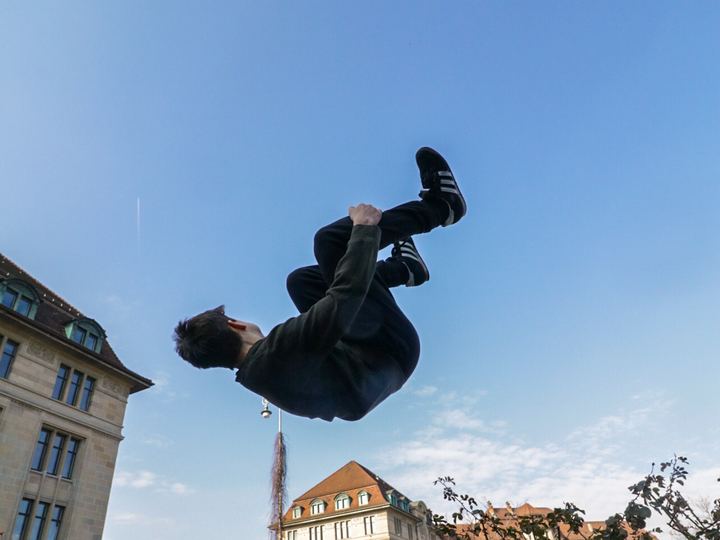
Slacklining in a park: Byron Wu, CC0
Born on rest days
Slacklining grew out of Yosemite's climbing community in the late 1970s and 1980s, when climbers on rest days balanced on chains and then on climbing webbing strung between trees in the Camp 4 campground. Adam Grosowsky and Jeff Ellington are often credited with popularising the practice.
Styles
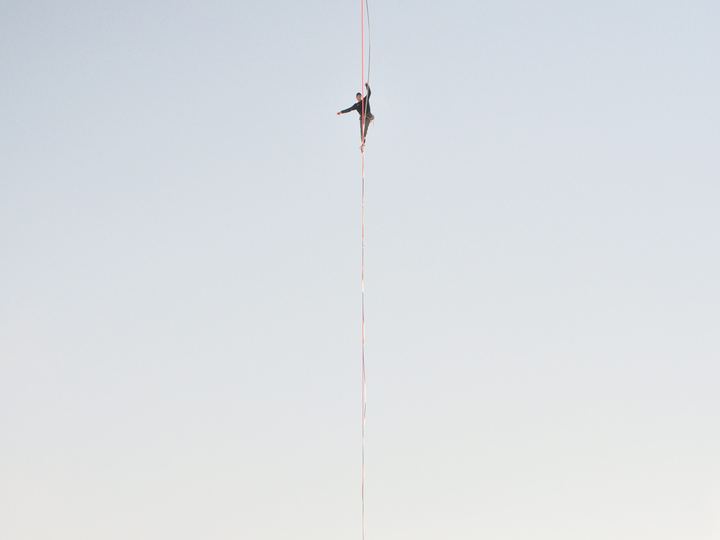
A trickline is short and tight for jumps, bounces and flips. A longline is long and stretchy, challenging endurance and focus. Waterlines are rigged over water so falls are softer, and highlines are rigged high above the ground with safety systems. Most people start on a short, low line in a park.
Setting up safely
Use a proper slackline kit with a ratchet or pulley system. Rig the line low, around knee height, over soft grass with no rocks. Protect trees with wide pads, choose healthy trees at least about 30 cm thick, and check local park rules, as some places restrict slacklines.
Did you know?
Slacklining is used by some physiotherapists and athletes as a balance training tool, because staying upright on a moving line challenges the small stabilising muscles in the ankles, knees and core. Competitive tricklining features jumps, spins and even flips, judged like a gymnastics routine. Many communities hold relaxed slackline meetups in parks where beginners can try different lines and learn from experienced walkers.
Waterlines rigged over pools or calm water are a fun way to practise, because falls simply mean a splash.
How to learn
Look at the anchor ahead, not your feet. Step up with one foot, bend the knee, raise your arms high and let your body find balance. Short attempts and many repetitions work best, and a friend can walk beside you for support at first. Balance improves surprisingly fast with practice, and many climbers use slacklining to train focus.
Professionals, don't try this: these athletes train for years with coaches, safety systems and spotters. Start at a supervised gym or club and progress slowly.
- Slacklining in a park: Byron Wu, CC0
Text written by Legendary Awesome.